PAMPA
In Quechua and Mapudungun, pampa refers to flatlands between mountains or in valleys and was used to name the region where I grew up: a vast plain that stretches across parts of Argentina, Uruguay, and Brazil. Following this topographic definition, pampa is defined through openness, scale, and potential.
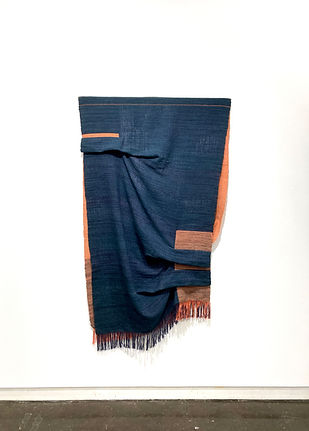
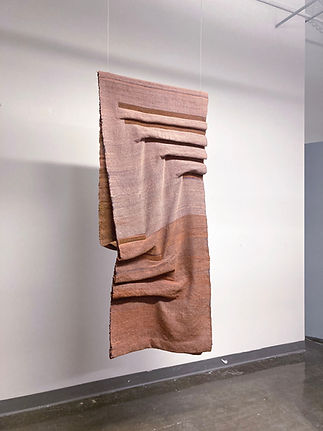
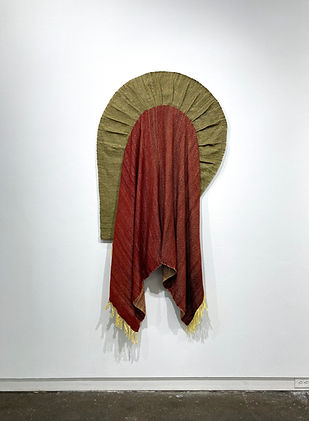
Through Andean beliefs, where nature and weaving are intertwined, pampa is equally a woven terminology as it is landscape. Within traditional weaving, pampa also describes the unpatterned or solid-colored ground areas of a textile: spaces often understood as the “unsaid” or what is yet to be expressed. In my work, I understand pampa as a space of possibility where chance and unpredictability can emerge. The large, flat woven planes in my work are controlled and tensioned while on the loom. But as they are released, they sag, ripple, and fold. They behave unpredictably, allowing the material to assert its own possibilities.
Pampa, as I understand it in my work, becomes a space for exploration and the emergence of form through material behavior. It is a space where meaning is not imposed but discovered when the material is allowed to behave as it wants.